Part 8 - Portfolio management
Written by Editor on June 6, 2026

TL;DR
Managing a retirement portfolio during withdrawals is different from building it. My approach: a three-tier drawdown waterfall (dividends first, then cash, then harvested gains), rebalancing twice a year with 10% bands, and cash reserves that can cover 24+ months without selling a single equity share in a downturn.
Running the portfolio
This post is part of an 8-post series on the construction of my portfolio.
In the previous parts of this series, I covered my high-level asset allocation, product criteria, and the specific ETFs and ETCs I chose to build the portfolio. With 75% in stocks (split between Market and Dividend/Value), 10% in bonds, 10% in cash equivalents, and 5% in gold, the machine is fully built.
But building the machine is only half the battle.
As a retiree in the execution phase, the psychological and financial stakes are completely different than they were during the accumulation phase. I can no longer “buy the dip” with fresh salary capital. Later is now. If a global crisis hits and my equity positions drop by 30%, a flawed withdrawal strategy could force me to sell shares at the bottom, converting temporary paper losses into permanent, irreversible damage.
This is the dreaded Sequence of Returns Risk, and it can destroy a retirement plan faster than high fees or bad product selection.
To protect my portfolio and sleep soundly, I use a practical, low-maintenance setup: separating my cash, implementing a drawdown waterfall, and using a simple rebalancing method.
Portfolio management in retirement isn’t about outsmarting the market or predicting the next macro crisis. It is about building a process that protects me from my own behavioural biases and structural vulnerabilities.
Pillar 1: Two types of cash
Before looking at how to spend the money, it is vital to separate the cash that protects your life from the cash that protects your portfolio.
As I mentioned in my post on dry powder, I maintain two separate cash pools:
- The Emergency Fund (Outside the Portfolio): Kept in a traditional, boring retail bank account and completely excluded from my financial asset allocation calculations. This is to pay the bills when markets tank and times are tough.
- Cash Equivalents (Inside the Portfolio): The max 10% allocation held in the iShares EUR Ultrashort Bond UCITS ETF that I detailed in Part 5. This cash does not exist to buy groceries next week; it serves as a strategic buffer to protect my stock positions from being liquidated during a downturn.
Pillar 2: Drawdown strategy
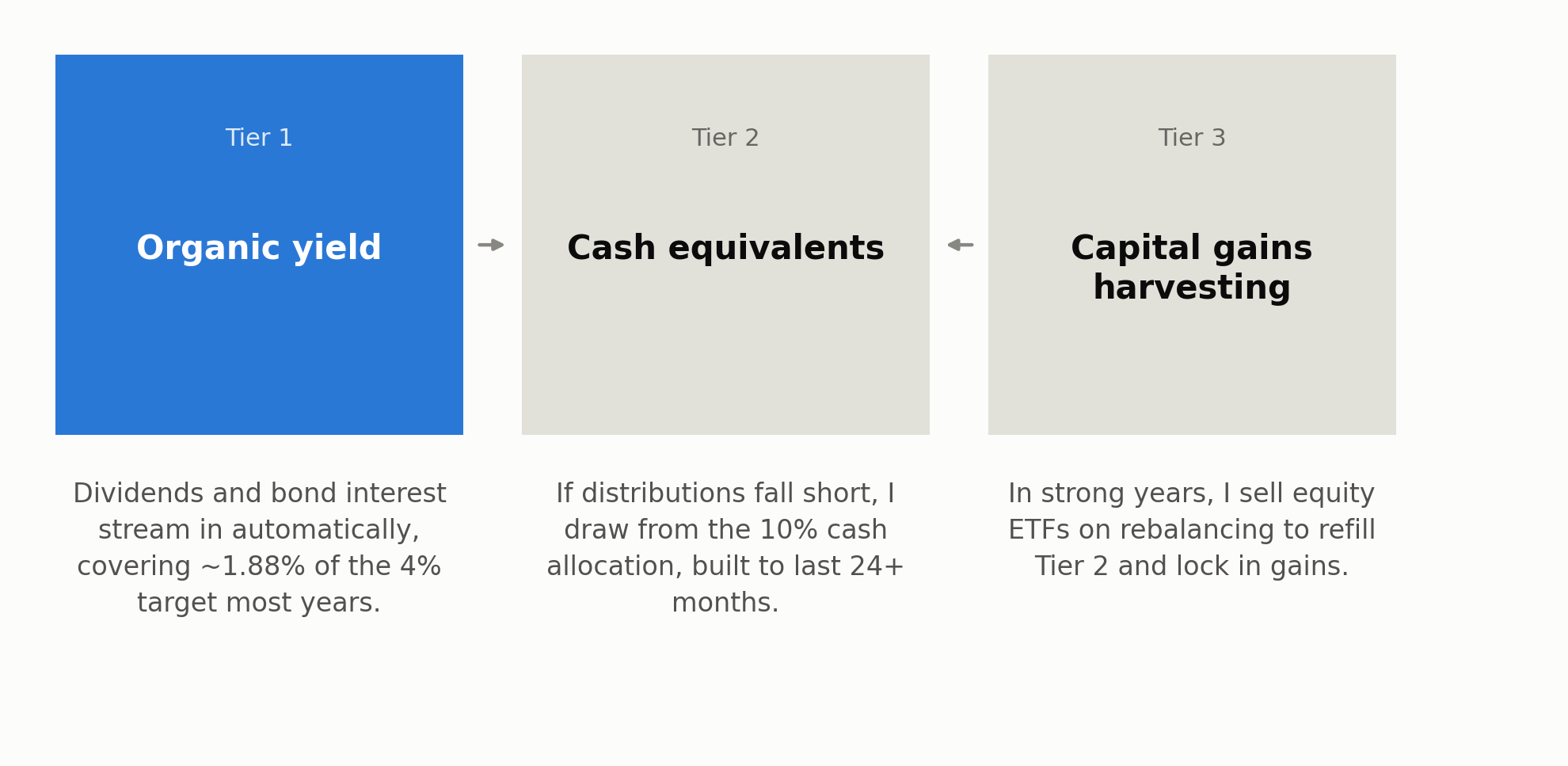
To ensure I never commit the sacrilege of selling cheap equity units during a market crash, I use a tiered drawdown strategy.
Tier 1: Organic yield
Periodically, the distributing ETFs in my portfolio stream cash directly into my brokerage account. In a normal market year, these dividends, combined with bond interest, cover roughly 1.88% - a substantial portion of my 4% targeted income stream.
Tier 2: The 10% cash equivalents
When distributions fall short of my required income, I draw from my 10% cash allocation. Because this buffer represents multiple years of net portfolio withdrawals when combined with ongoing dividend distributions, I can comfortably let the stock market drop for 24 months or more without being forced to sell a single equity ETF share.
Tier 3: Capital gains harvesting
In strong market years when my equity ETFs have grown significantly, the waterfall operates in reverse. I harvest capital gains by selling equity ETFs during rebalancing to fund my income stream, replenish Tier 2, and lock in profits.
Pillar 3: Practical rebalancing
Rebalancing is the mechanism that automatically forces me to keep my portfolio setup intact. However, over-trading adds unnecessary transaction costs and bid-ask spreads, acting as a drag on performance.
I evaluate my portfolio for rebalancing twice a year, as explained in this post. Only categories that have deviated by more than 10% from their target weight are corrected. During this process, I also check the structural currency and regional constraints established in Part 1.
Time for execution!
With allocation rules set, products selected, historical backtests run, and a management framework in place, the design stage comes to an end.
Transitioning from decades of wealth accumulation to decumulation requires discipline and trust in my system. I feel this portfolio is built to handle whatever market conditions come next - though I’m quite sure that feeling will be tested. The execution phase will certainly be an adventure.
Over the coming months, I will build this portfolio step by step and keep you updated on the progress.
Thanks for your interest!